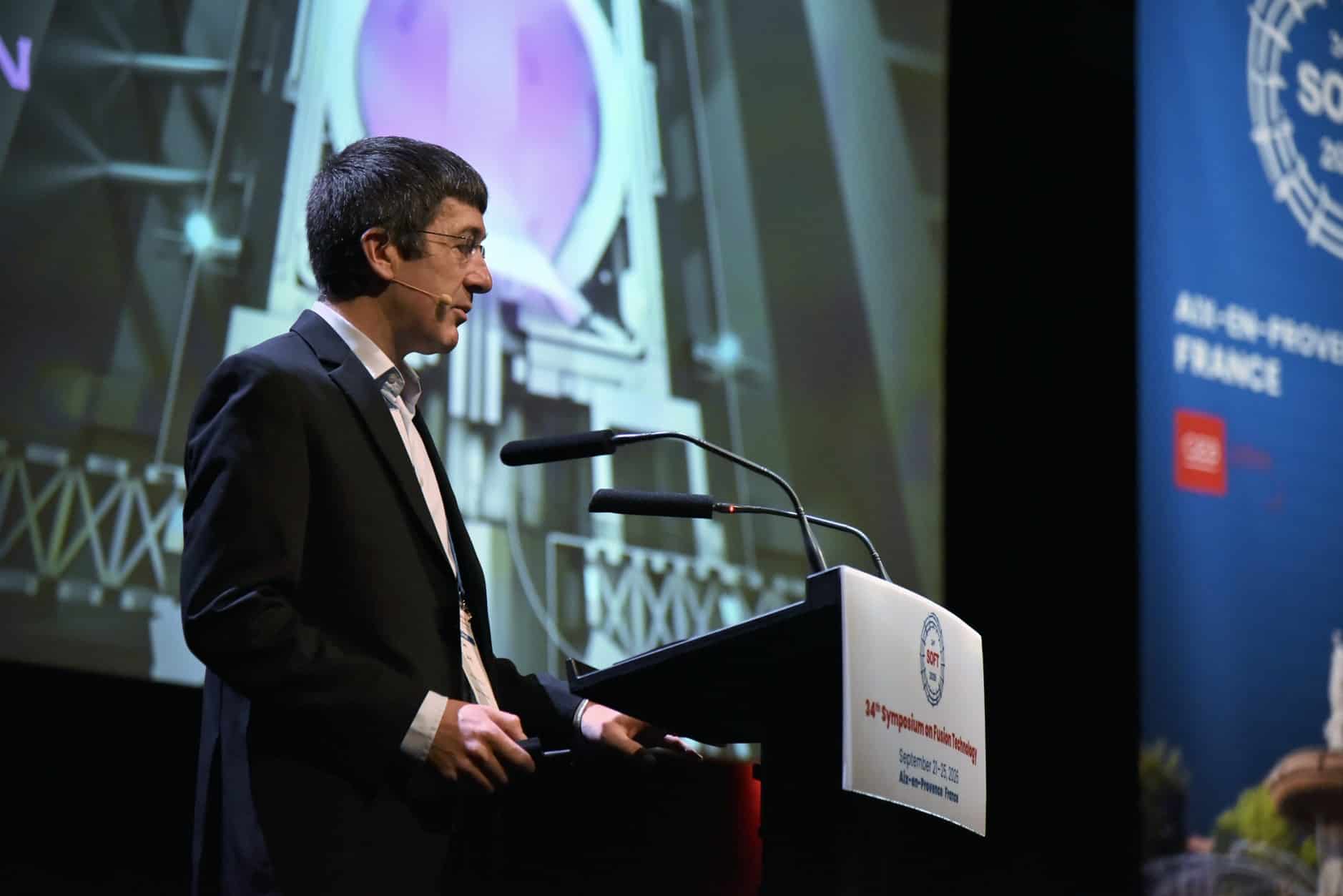
STEP Fusion, the UK’s flagship fusion energy programme, has presented the latest evolution of its STEP Prototype Powerplant (SPP) design at SOFT 2026, the 34th Symposium on Fusion Technology in Aix-en-Provence, revealing new design innovations aimed at improving the commercial viability of future fusion powerplants.
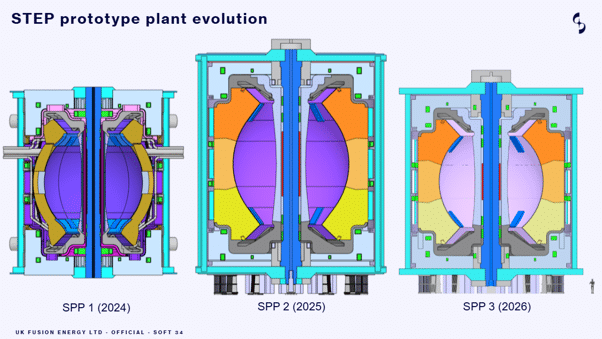
The presentation showcased SPP3, the third generation of the STEP prototype plant design and the latest milestone in the programme’s ongoing work to deliver a prototype fusion powerplant capable of producing net electricity and paving the way for a future commercial fleet.
Building on previous design iterations, SPP3 demonstrates how targeted improvements in key technologies and plant architecture could significantly enhance performance, maintainability and operational availability.
A major focus of the presentation was the ambition to increase the efficiency of gyrotrons, the high-power microwave systems used to heat and sustain fusion plasmas.
The SPP3 design also reinforces one of STEP’s key differentiators: a spherical tokamak concept designed to support steady-state operation, rather than being intrinsically pulsed. This approach is intended to maximise electricity production and provide a more direct route to commercially attractive fusion powerplants.
Alongside advances in plasma heating, STEP presented new details of its approach to maintenance and plant availability, including its vertical maintenance strategy and emerging stacked rings architecture.
These innovations are designed to simplify access to in-vessel components, reduce maintenance outages and support the high levels of availability that will be required from future fusion powerplants.
The stacked rings concept, discussed publicly for the first time at an international conference, forms part of STEP’s wider strategy to design a powerplant that can not only generate electricity but also be maintained quickly enough to achieve high availability and hence be operated efficiently throughout its lifetime.
Sam Davis, Head of Engineering for the Tokamak Machine at STEP Fusion, said:
“This is all very hard, but we have to keep sight of the benefits. We are consciously taking on some of these technical challenges and uncertainties because they unlock steady-state operation and practical maintenance.
“And of course, we’re doing everything we can to mitigate the risks in the meantime, for example by testing everything we can.”
The SPP3 design continues STEP’s focus on delivering net electrical output, achieving fuel self-sufficiency, and creating a design that can be replicated through industrial partners as part of a future fleet of fusion powerplants.
Presented to the international fusion community at SOFT 2026, SPP3 represents the latest step in the programme’s progression from concept design towards a commercially relevant prototype powerplant.