FORWARD TO FUSION
The first of its kind, STEP Fusion is the UK’s major technology and infrastructure programme to build a prototype fusion power plant that will demonstrate net energy, fuel self-sufficiency and a viable route to plant maintenance.
This will pave the way for the potential development of a fleet of future fusion power plants around the world and the commercialisation of fusion energy.
We’ll achieve this by producing a prototype tokamak power plant — in an innovative spherical shape — that will demonstrate net energy. That’s why the programme is called STEP: it stands for ‘Spherical Tokamak for Energy Production’.
But STEP Fusion is about more than tokamak technology — it’s a huge endeavour encompassing design, site development and construction, alongside supply chain logistics and industry. Fusion research and development has the potential to catalyse new ideas and technologies that will benefit multiple industries and help secure our future on this planet.
By fusing government and business, inspiration and pragmatism, theory and practice, UK-expertise and international impact, we’re going to realise the step-change that will secure humanity’s bright future.


why fusion?
Humanity faces a future of severe challenges. If we want to continue to flourish, we need revolutionary new technology. That technology is fusion.
By harnessing the process that powers the Sun and stars, fusion has the potential to provide a safe, abundant source of low carbon energy.
It’s also remarkably clean. Fusion is carbon-free at the point of generation. The process itself produces no carbon emissions — the waste product is helium, which doesn’t contribute to global warming. Currently, carbon is used to manufacture the components and buildings needed to start up a power plant — but there’s already a focus on reducing this.
Ultimately, fusion could be an environmentally responsible part of the world’s energy supply in the second half of this century.
How fusion works:
Harnessing the power of the sun and stars.
A combination of hydrogen gases — deuterium and tritium — are heated to over 100 million degrees Celsius (that’s 10 times hotter than the core of the Sun) in an advanced device called a tokamak.

The hydrogen gasses form an intensely hot plasma that is confined with powerful magnets. Inside this magnetic field, the gasses collide to create Helium and an energetic Neutron.

With each combination, as per Einstein’s famous equation E=MC2, a small fraction of mass converts into energy. This ‘fusion’ energy is produced in vast amounts, as millions of these reactions occur in the plasma every second, generating a significant amount of energy from a very small amount of fuel. Additionally, the neutrons produced in the process interact with other materials in the reactor, which breeds more tritium – and that tritium is injected back into the plasma to promote fuel self-sufficiency.

This energy is used to create steam, to turn a turbine, generating electricity — just like in any conventional power plant.

Fusion power falls to zero in seconds if control of the plasma is lost — there’s zero chance of a ‘runaway reaction’ with fusion (the challenge is sustaining it, not containing)

The future’s bright. The future’s pink. And shaped like A cored apple.
STEP Fusion’s spherical tokamak design is unique – and revolutionary. Here’s why.
It’s the result of 66+ integrated concepts with 150+ iterations — going through 66 technical decision boards that have taken 165+ decisions.
The plasma inside will form a shape like a cored apple (rather than the ring shape type such as the Joint European Torus). This brings the plasma closer to the wall of the machine, and allows for a more compact tokamak, with smaller magnets.
Spherical tokamaks are more space efficient, and produce a higher quality plasma. It’s also possible to build them in a modular way, simplifying the assembly and maintenance process.
STEP programme TIMELINE
In this first phase, we focused on concept design and development of the organisation to enable us to deliver a major technology and infrastructure programme. We also selected a site and ensured world-leading regulatory framework was in place to enable us to build a prototype fusion power plant.
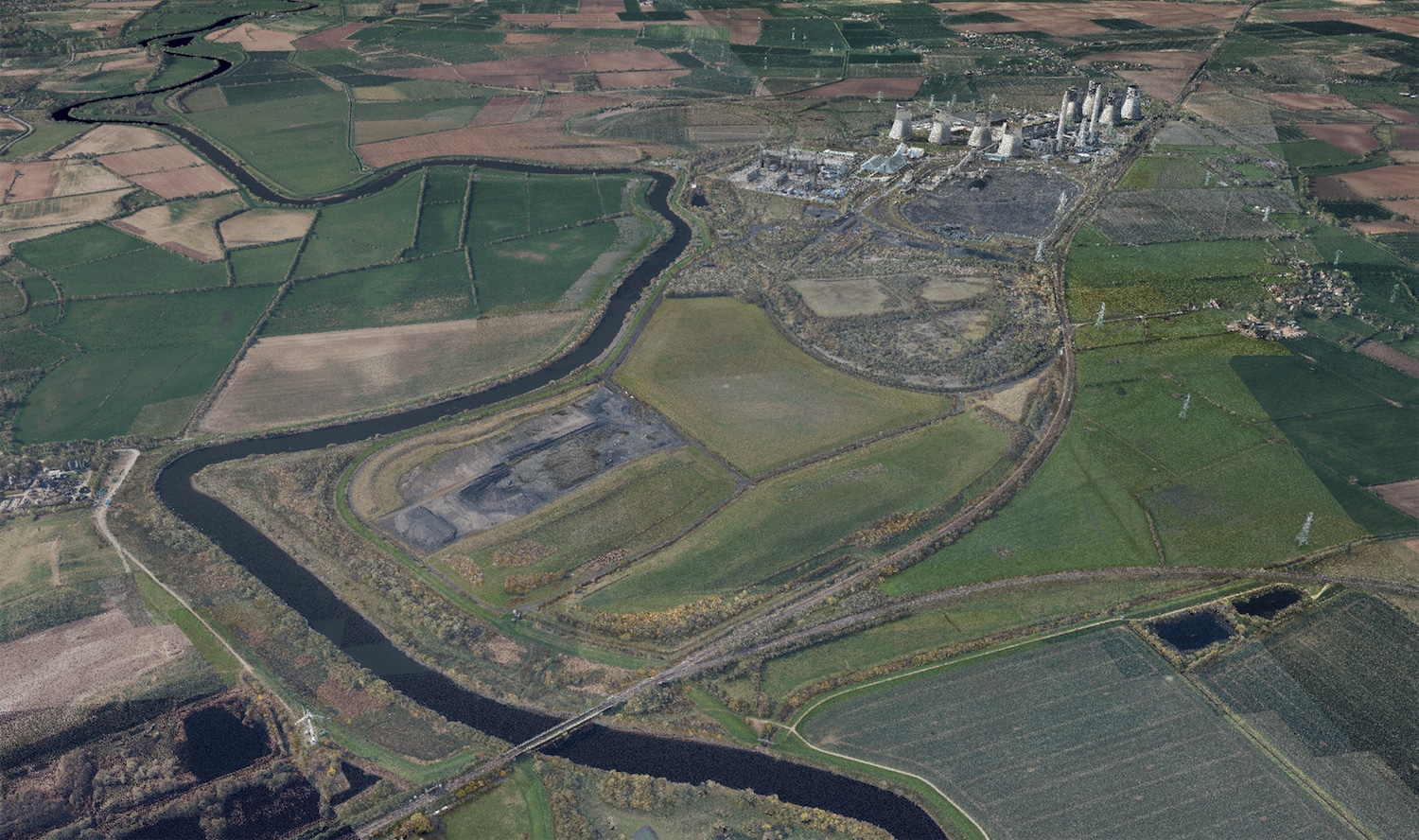
The phase concluded with a concept design for the power plant and a view on how we’ll design each of the major systems. Having selected West Burton in Nottinghamshire as our site, we established a small office in February 2024. By the end of this phase, we finalised a delivery model for STEP Fusion, laying the groundwork for future phases to come.
Towards the end of this period site characterisation work was well underway at West Burton. This included things like:
- Ground Investigation (how geology will inform construction).
- Biodiversity Net Gain (understanding local flora and fauna, and how we can add to the environment overall).
- Transport (understanding limits, capacity and modelling).
- Ash characterisation (working out how best to manage large quantities of ash, including recycling some into new construction materials).
In June 2025, the government announced £2.5 billion over four years for fusion research and development, with £1.3 billion for the STEP programme.
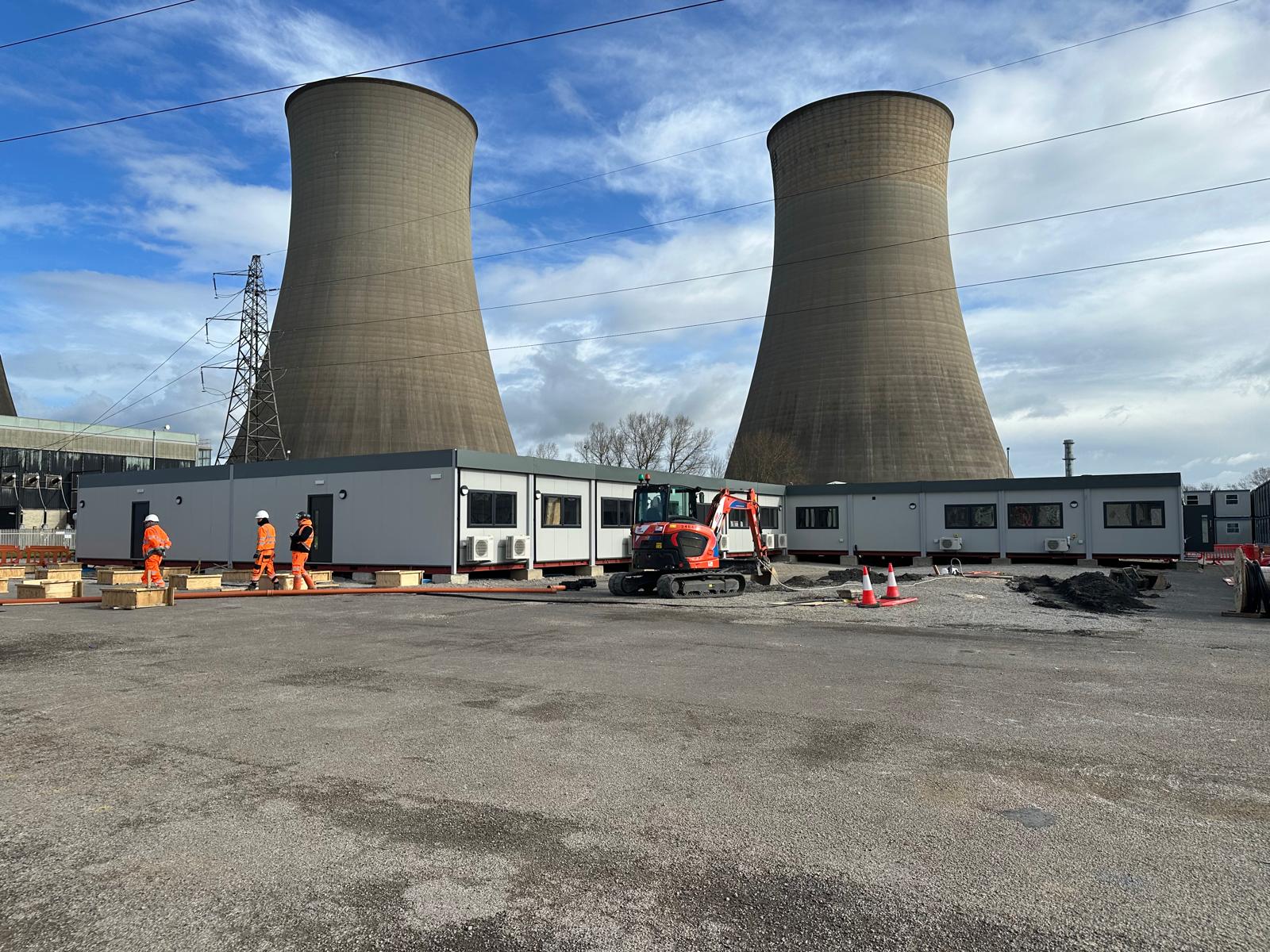
Work shifts from design exploration to design development coupled with technology development. Following work undertaken in the first phase, we’ve built a capable delivery organisation and expanded our team and office space at West Burton – combining programme delivery, technical know-how and commercial capability.
Alongside the concept design work, we’ve developed technology roadmaps which define how each of the key technologies required can be matured sufficiently in time for integration into our prototype plant.
Work with local partners and the community around West Burton has significantly increased, and our first non-statutory public consultation for Development Consent was held between January and March 2026.
In March and April 2026, we announced our construction partner, ILIOS (a Kier-NUVIA joint venture), along with Tokamak Energy and Dassault Systèmes as systems partners – as we begin to enable works and move to delivery.
The third phase is about plant assembly and infrastructure construction which will start in the 2030s, when planning permissions and consents are in place. We’ll continue to source and build our supply chain as we create a UK-based, global fusion industry.
The prototype plant will commence first operations in 2040 with at least 100MW of net energy demonstrated as soon as practicable.